
We Do Legal Company Product Registered Criminal Lawyer Much More
Legal Guide to Family Offices in the UAE
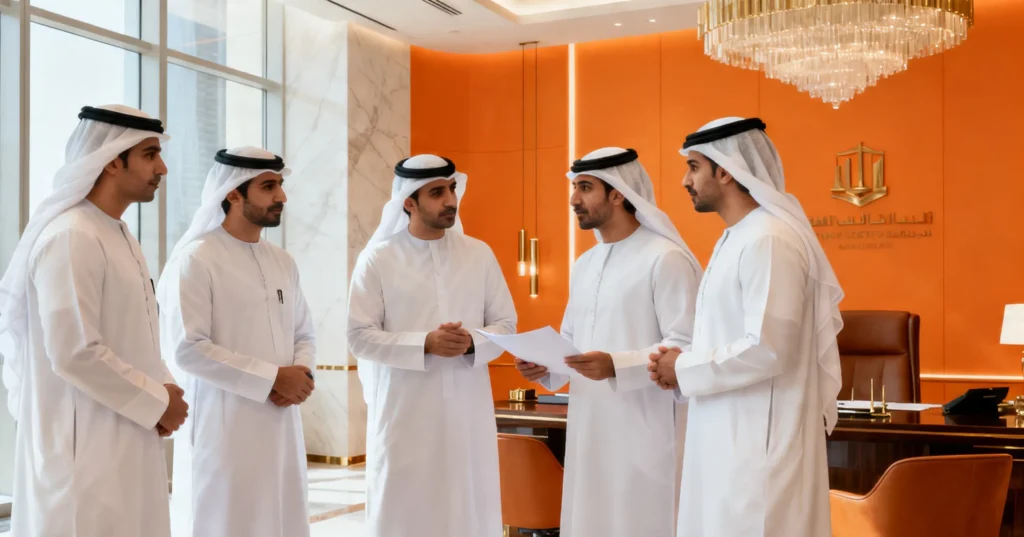
What is a Family Office and Why is the UAE a Global Wealth Hub?
A Family Office is a private wealth management advisory firm that serves ultra-high-net-worth individuals (UHNWIs) and multi-generational families. Unlike traditional wealth management firms, a family office provides a comprehensive, centralized outsourcing solution to manage all aspects of a family’s financial, legal, tax, governance, and lifestyle affairs. These structures are broadly categorized into Single-Family Offices (SFOs), which manage the wealth of a single family, and Multi-Family Offices (MFOs), which manage assets for multiple unrelated families.
Over the last decade, the United Arab Emirates (UAE) has firmly established itself as a premier global hub for family offices and private wealth preservation. This rise is driven by several macroeconomic and regulatory pillars:
- A robust, business-friendly tax regime characterized by minimal personal income taxes and an expanding network of double taxation treaties.
- Highly sophisticated legal environments within both civil law and common law jurisdictions.
- World-class infrastructure, exceptional safety, and strategic geographic connectivity linking Eastern and Western capital markets.
- Innovative legal frameworks specifically tailored to generational wealth transfer, asset protection, and corporate governance.
Families choose the UAE to insulate their global portfolios from geopolitical volatility, implement institutional-grade governance, and ensure a seamless transition of leadership and assets to the next generation.
What is the Legislative Framework Governing Family Offices in the UAE?
The legal landscape for family offices in the UAE is unique, offering a dual-jurisdiction system where families can select between civil law frameworks or independent English-common-law jurisdictions.
Onshore Federal Framework
Historically, onshore corporate entities were governed strictly by federal civil laws. However, the UAE has implemented groundbreaking legislation specifically dedicated to family wealth:
- Federal Decree-Law No. 37 of 2022 on Family Companies: This landmark law establishes a comprehensive statutory framework for family-owned businesses. It aims to prevent dispute-driven liquidations, regulates the transition of shares between generations, allows for the issuance of multi-class shares (e.g., separating voting rights from economic rights), and provides specialized dispute resolution mechanisms.
- Federal Decree-Law No. 32 of 2021 on Commercial Companies: This serves as the baseline law for corporate formations, including Limited Liability Companies (LLCs) and Joint Stock Companies, which can be deployed within an onshore family wealth architecture.
- Federal Decree-Law No. 19 of 2018 on Trust Laws (and subsequent state-level trust laws like Dubai Law No. 9 of 2020): This introduced the concept of the civil law trust to the UAE mainland, allowing assets to be held by a trustee for beneficiaries, a crucial tool for family offices managing mainland real estate and business assets.
Financial Free Zones (Common Law)
For families seeking an international common law environment complete with its own independent judicial system, the UAE offers two world-class financial free zones:
- Dubai International Financial Centre (DIFC): Regulated by the Dubai Financial Services Authority (DFSA). Key legislation includes the DIFC Family Arrangements Regulations 2023, the DIFC Trust Law (DIFC Law No. 4 of 2018), and the DIFC Foundations Law (DIFC Law No. 3 of 2018).
- Abu Dhabi Global Market (ADGM): Regulated by the Financial Services Regulatory Authority (FSRA). Key legislation includes the ADGM Foundation Regulations 2017, the ADGM Trust Regulations 2016, and specialized single-family office registration frameworks.
Which Laws Explicitly Apply to Family Asset Structures?
When advising on or establishing a family office architecture, legal counsels must navigate a matrix of statutes designed to ensure transparency, compliance, and structural integrity.
1. Corporate & Regulatory Statutes
- DIFC Family Arrangements Regulations 2023: Replaced older SFO regimes, providing a unified framework for family businesses, family entities, and family offices operating within or from the DIFC. It offers significant privacy exemptions regarding public disclosure of ultimate beneficial owners while maintaining strict regulatory compliance with the DIFC Registrar.
- ADGM Single Family Office Regime: Allows an entity to be exempted from the full scope of financial services regulations provided it strictly manages "family wealth" defined by specific degrees of consanguinity (blood relations).
2. Tax Compliance & International Reporting
- Federal Decree-Law No. 47 of 2022 on the Taxation of Corporations and Businesses: Introduced a baseline 9% corporate tax rate in the UAE. Family offices must evaluate whether their holding companies, foundations, or SFOs qualify as an "Exempt Person" under Article 4 or can apply for "Unincorporated Partnership" or "Family Trust" transparency status, which prevents double taxation of investment income.
- Cabinet Resolution No. 109 of 2023 on the Regulation of Real Beneficiary Procedures (UBO Regulations): Mandates that all onshore and commercial free zone companies maintain registers of Ultimate Beneficial Owners (UBOs) and submit this data to relevant licensing authorities to combat financial crime.
- FATCA and CRS Compliance: The UAE is a signatory to the Foreign Account Tax Compliance Act (FATCA) and the Common Reporting Standard (CRS). Family offices acting as investment entities or holding financial accounts must implement rigorous classification and reporting workflows to avoid severe non-compliance penalties.
How Does the Step-by-Step Setup Process Work?
Establishing an institutional family office requires a systematic approach to ensure alignment with family objectives and full regulatory compliance.
1.Jurisdiction Selection and Structural Design:Weeks 1–3.
Analyze the family's asset mix (onshore vs. international), target investments, governance objectives, and preferred legal system (Civil Law vs. Common Law). Determine whether a Single-Family Office (SFO) or a Multi-Family Office (MFO) structure is legally required based on whether third-party assets will be managed.
2.Drafting Constitutional Documents and Family Charters:Weeks 4–6.
Draft the Articles of Association, Foundation Charters, or Trust Deeds. Simultaneously, construct a non-binding Family Constitution or Charter detailing the family's vision, succession pathways, governance committees, and conflict resolution rules.
3.Regulatory Submission and Name Reservation:Weeks 7–8.
Submit the formal application to the chosen Registrar (e.g., Dubai Economy and Tourism for onshore, DIFC ROC, or ADGM Registration Authority). Secure initial approval for the corporate name and proposed activities.
4.Corporate Secretarial Setup and Commercial Licensing:Weeks 9–10.
Secure physical or registered office space as required by the jurisdiction. File the final ultimate beneficial ownership (UBO) declarations, pay regulatory fees, and secure the Commercial License or Certificate of Incorporation.
5.Corporate Bank Account Opening and Asset Asset Transfer:Weeks 11–14.
Navigate institutional Know-Your-Customer (KYC) and Anti-Money Laundering (AML) onboarding protocols to open corporate bank accounts. Execute the legal transfer of family assets (shares, real estate, portfolios) into the newly incorporated family office holding structure.
Overview
العربية Arabic
تعتبر المكاتب العائلية في دولة الإمارات العربية المتحدة أداة قانونية ومؤسسية بالغة الأهمية لحماية وإدارة الثروات العائلية وضمان انتقالها بسلاسة بين الأجيال. بفضل النظام القانوني المزدوج الذي يجمع بين القانون المدني في المناطق البرية (Onshore) والقانون العام الإنجليزي في المناطق الحرة المالية مثل مركز دبي المالي العالمي (DIFC) وسوق أبوظبي العالمي (ADGM)، توفر الدولة مرونة تامة للهياكل الاستثمارية. يجب على جميع الشركات العائلية الالتزام بالمرسوم بقانون اتحادي رقم (37) لسنة 2022 بشأن الشركات العائلية، وقوانين المستفيد الحقيقي (UBO)، والتشريعات الضريبية الجديدة لعام 2022 لضمان الامتثال الكامل وتجنب المخاطر القانونية.
Русский (Russian)
Семейные офисы в ОАЭ представляют собой передовые правовые структуры для защиты активов и преемственности поколений. Благодаря наличию двух правовых систем — гражданского права на материковой части (Onshore) и английского общего права в финансовых фризонах (DIFC и ADGM) — инвесторы получают беспрецедентную гибкость. Полноценное соответствие Федеральному закону № 37 от 2022 года о семейных компаниях и правилам КИК/UBO является обязательным для минимизации юридических рисков.
简体中文 (Chinese)
阿联酋(UAE)家族办公室已成为全球超高净值家庭进行资产保护和家族传承的核心法律架构。通过阿联酋本土(民商法系)与迪拜国际金融中心(DIFC)、阿布扎比全球市场(ADGM)的大陆法与普通法双轨制,家族办公室可实现高度定制化治理。设立过程中必须严格遵守2022年第37号联邦家族公司法、最终受益人(UBO)穿透式穿透披露及阿联酋最新公司税法,以确保架构的合规性与资产隔离效果。
Français (French)
Les family offices aux Émirats Arabes Unis constituent des structures juridiques de premier plan pour la préservation du patrimoine et la gouvernance intergénérationnelle. Grâce à un système juridique dual — droit civil onshore et common law anglaise au sein du DIFC et de l'ADGM — les familles fortunées bénéficient d'un cadre hautement sécurisé. La conformité stricte avec le décret-loi fédéral n° 37 de 2022 sur les entreprises familiales et les réglementations UBO est indispensable pour sécuriser les actifs mondiaux.
Frequently Asked Question
What is the minimum asset threshold required to open a family office in Dubai?
There is no longer a uniform statutory minimum asset requirement to establish an SFO in the UAE. However, due to administrative costs, physical office requirements, and staffing obligations, an institutional family office structure is typically recommended for families with investable assets exceeding USD 20 million to 30 million.
Can a foreign national use a UAE family office to hold global assets?
Yes. Both the DIFC and ADGM frameworks are specifically designed to allow international assets, including global real estate, offshore corporate shares, and foreign investment portfolios, to be held securely under a UAE-incorporated family office or foundation.
How does the UAE Corporate Tax Law affect Single-Family Offices?
Under Federal Decree-Law No. 47 of 2022, family offices are subject to the corporate tax framework. However, family trusts, foundations, and dedicated holding companies can apply for tax transparent status or explicit exemptions if they meet the strict criteria of an "Exempt Person" or function solely as passive asset-holding vehicles for ultimate beneficiaries.
What is the difference between a family trust and a family foundation in the UAE?
A trust is a contractual arrangement where a settlor transfers asset ownership to a trustee to manage for beneficiaries; it does not have a distinct legal personality. A foundation is a registered corporate entity with its own distinct legal personality, capable of holding assets, entering contracts, and suing or being sued in its own name, while retaining a charter and by-laws.
Can an onshore family office own real estate anywhere in the UAE?
An onshore family office structured under the relevant Emirate's Department of Economy and Tourism can own real estate across the UAE, subject to local property laws. Free zone entities (like those in DIFC or ADGM) can hold mainland real estate through specific Memorandums of Understanding (MOUs) established between the free zone and local land departments.
How does the Family Companies Law of 2022 prevent internal family disputes?
The law allows families to draft legally binding articles that prevent the sale of corporate shares to non-family members without prior right of refusal. It also establishes a dedicated Family Business Dispute Resolution Committee, bypassing public courts to resolve issues confidentially and efficiently.
Is the ultimate beneficial owner information of a family office accessible to the public?
In both the DIFC and ADGM, as well as onshore registries, ultimate beneficial owner (UBO) registers are maintained securely and are not accessible to the general public. This information is shared exclusively with regulatory and law enforcement authorities to satisfy global compliance standards.
Can a Multi-Family Office manage wealth for families not residing in the UAE?
Yes. An MFO licensed by the DFSA in the DIFC or the FSRA in the ADGM can provide wealth management and advisory services to international families, regardless of their residency status, provided all mandatory cross-border regulatory clearances and KYC requirements are met.
What are the operational substance requirements for a family office in the UAE?
Family offices must demonstrate actual operational presence within their chosen jurisdiction. This generally includes maintaining a physical office space, hiring qualified senior executives (such as a senior executive officer or managing director), and conducting core decision-making activities (such as board meetings) within the UAE.
Can a family office issue different classes of shares to family members?
Yes. Under both the onshore Family Companies Law and the corporate laws of the financial free zones (DIFC and ADGM), family offices can structure multiple classes of shares. This allows families to award economic dividends to younger generations while retaining voting rights and management control among senior leadership.
Call to Action
For professional assistance regarding the structuring, governance, and legal compliance of Single-Family Offices, Multi-Family Offices, and Foundations within the UAE mainland, DIFC, or ADGM, please contact our legal editorial and corporate advisory desk:
- Email: file@commerciallawyersindubai.com
- Phone/WhatsApp: +971 50 62 75 196
- Website: [commerciallawyersindubai.com/](https://commerciallawyersindubai.com/)
How can we help you?
Contact us at the Consulting WP office nearest to you or submit a business inquiry online.

Quick Links
Our Services
Contact Us
14-Aspin Tower, Sheikh Zayed Road, Dubai UAE